Showing posts with label holiness. Show all posts

Monday, July 9, 2018

Why We Never See Jesus Laugh In The Bible (Part 1)


I love to laugh. Most of us do. In the midst of this life we live, in which many times sorrow and hardship are our bedfellows, laughter is like medicine to our souls. Most of us are familiar with the oft-quoted maxim that says, “Laughter is the best medicine.” Even science and psychologists have come to accept this as a true saying. But did you know that the Bible never records a single moment in which Jesus laughed.

Yes, it’s true, there is not one single reference to any time that Jesus laughed. Now, I am not saying that I don’t believe He never did. Having taken on humanity in His incarnation, Jesus possessed all the same emotions we do, though He never sinned in His expression of them, as we do. But the Bible does not record a single instance in which Jesus laughed. Why not?

The answer to that question is very important in our understanding of who God is. God has revealed Himself to us in scripture and it is the only trustworthy source by which we can come to know and understand Him. We do find that God laughs in the Old Testament. But when God laughs, it appears it is in a derisive way and directed at those foolish enough to plot against Him.

Psalm 2:1-4
Why do the nations rage and the peoples plot in vain?  The kings of the earth set themselves, and the rulers take counsel together, against the LORD and against his Anointed, saying, “Let us burst their bonds apart and cast away their cords from us.”  He who sits in the heavens laughs; the Lord holds them in derision.

Psalm 37:12-13
The wicked plots against the righteous and gnashes his teeth at him, but the Lord laughs at the wicked, for he sees that his day is coming.

Do a word search on laughter in the Bible sometime. It is interesting to see what the Bible has to say about laughter.

Returning now to the thought of Jesus and why we don’t have stories of Him laughing, I think it is important to us to get a good grip on the purpose for Jesus coming to us as a man. Though the answer to this question is a study within itself, I think 1 Timothy 1:15 gives us a simple and concise answer. There we read that “Christ Jesus came into the world to save sinners.” And the truth of that mission reveals to us the extreme serious nature of sin as it relates to our most holy God. The holiness of God demands that He not tolerate sin in His Kingdom. (The idea that God cannot be in the presence of sin is the wrong way to describe it since Jesus was fully God and yet was constantly surrounded by sinners sinning.) But the truth is that God’s holiness and His just nature results in righteous indignation that will result in His wrath being poured out in the final judgment against sin. Again, much more to the story than this, but simply put, we are sinners in need of a savior to be restored in fellowship with God. This is why Jesus came.

So, who is this man Jesus, who the Bible never speaks of as having laughed. The Prophet Isaiah gives us a picture of Jesus in Isaiah 53:2-3 saying that “he grew up before him like a young plant, and like a root out of dry ground; he had no form or majesty that we should look at him, and no beauty that we should desire him.  He was despised and rejected by men; a man of sorrows, and acquainted with grief; and as one from whom men hide their faces he was despised, and we esteemed him not.”

If you have more than one child, you know that people are born with certain dispositions. You might have one born with a natural inclination towards being happy all the time and maybe your next baby just seems to be more serious. As they grow, distinct personality traits come forth and they become who they are. Jesus is described by the Prophet Isaiah as a man of sorrows. Isaiah goes on to say that He was acquainted with grief and even tells us that He was no beauty that we should desire Him. This does not sound like the picture of Jesus our grandmother had up in her living room. Quite honestly, it doesn’t sound like the Jesus we hear about in church. But to the Christian, it is an imperative that we understand why the Holy Spirit inspired the writers of scripture to describe Him in this way.

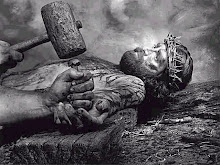
Though Jesus came doing miracles and healings to many, the main purpose He came for was to go to the cross. He came to suffer and die. He came to become sin for us, so that we could be redeemed from our own slavery to sin. He came to face the wrath of God so that you and I wouldn’t have to. What He came to do was going to be the most horrible experience anyone might ever imagine. What He came purposed to do is no laughing matter.

This morning I was studying the passage in Mark 14:32-41. I believe that in this short story of the night of His arrest, we can find many truths that will help us understand better, who Jesus is and why He came. Part two of this writing will look into this night that occurs in the Garden of Gethsemane.

I leave you with a thought to ponder about this great passage of scripture. Gethsemane means “olive press.” Olive presses are the tools that extract the oil from the olives by crushing them. That’s how we get Olive Oil. Take time today to read the Gospel accounts of Jesus in the Garden of Gethsemane and meditate on He would be pressed and crushed in the coming hours after praying in the garden.

Until next time, God bless you.

Thursday, June 7, 2018

Who Do You Say Jesus Is?


Three of the four Gospels record a story of Jesus asking the disciples this question, “But who do you say that I am?” Peter, ever the one not afraid to step up boldly, responds saying, You are the Christ, the Son of the living God.”

How do you answer that question? Who do you say that Jesus is? When Peter responded that Jesus was the Christ, he was stating that certainly Jesus was the Messiah, the expected one whom the Old Testament prophesized of. Throughout His earthly life Jesus declared Himself to be the Son of God, a title that also claimed deity. Isaiah 53 is a clear prophesy of the Christ to come. Take time today to read this beautiful passage that describes our dear Lord Jesus. I call attention to two of the verses that tell our story and what He means to us.

Isaiah 53:5-6
But he was pierced for our transgressions; he was crushed for our iniquities; upon him was the chastisement that brought us peace, and with his wounds we are healed.  All we like sheep have gone astray; we have turned—every one—to his own way; and the LORD has laid on him the iniquity of us all.

Reading this, how do YOU answer the question from Jesus, “Who do you say I am?”

If like Peter, you answer that Jesus is the Messiah, then the Gospels have a warning for you. Just moments after having declared that Jesus was the anointed one from God, Peter has the audacity to rebuke Jesus. Take a look.

Mark 8:31-32
And he began to teach them that the Son of Man must suffer many things and be rejected by the elders and the chief priests and the scribes and be killed, and after three days rise again.  And he said this plainly. And Peter took him aside and began to rebuke him.

Peter didn’t like the plan. He was unwilling to accept the divine and sovereign way that God was going to save men from their sins, so Peter rebuked Jesus. We read this story amazed that Peter could be so foolish. You see Peter wanted things his way.

What if we pause now and look deeply into our own hearts? Are we really all that much different than Peter? Do we read our Bibles and find some way to alter the things Jesus said so that we don’t have to obey Him? Do we look upon our own sins and gloss them over? Maybe we admit them but mitigate them in some way. No, we don’t boldly rebuke Jesus for telling us to love our enemies; we just say Jesus wasn’t talking to me. Or maybe we simply declare the commands of scripture as outdated and not fitting the modern culture. There are a million and one ways we find a way around living the Holy life Jesus calls us to. In essence, anything but total surrender to the commands of Jesus is a silent rebuke of who He is.

Here is Jesus’ response to Peter’s rebuke.

Mark 8:33
But turning and seeing his disciples, he rebuked Peter and said, “Get behind me, Satan! For you are not setting your mind on the things of God, but on the things of man.”

Then Jesus called others to hear what He had to say.

Mark 8:34-36
And calling the crowd to him with his disciples, he said to them, “If anyone would come after me, let him deny himself and take up his cross and follow me.  For whoever would save his life will lose it, but whoever loses his life for my sake and the gospel’s will save it.  For what does it profit a man to gain the whole world and forfeit his soul?

It’s time we looked hard at the question from Jesus, “Who do you say I am?” If we say Jesus, you are the Christ, the Son of the living God, then we need to obey Him. I will say it again, because I need to hear it, anything but total surrender to the commands of Jesus is a silent rebuke of who He is.

Will we fail at times? Of course. But we must stop rebuking Jesus and take up our cross and follow Him. He is our shepherd and where does our shepherd lead us?

Psalm 23:3
He leads me in the paths of righteousness For His name's sake.

Who do you say He is? If He is our shepherd, then we must follow Him.


Tuesday, May 1, 2018

Studies In Matthew - Confronting Hypocrisy


My morning time with God this morning found me in Matthew, chapter 23. This is the section in which we find Jesus confronting the Scribes and the Pharisees with their hypocrisy. That the very leaders of the Jewish people would be such hypocrites, was very important to Jesus, so much so that He spoke out against them and pronounced seven woes against them.

It is tempting to see this section in only its immediate context and to shake our heads at these horrible men. But do we really think that the Holy Spirit inspired Matthew to record this narrative simply, so we could applaud Jesus for putting these bad men in their places?

1 Corinthians 10:6 reminds us why we have these stories. It says that “these things took place as examples for us, that we might not desire evil as they did.”

The Word of God is not just a story about the history of the Jews; it is God’s Word written so that those who are Born Again will know what God expects us to be like as we grow in our faith. There is a spiritual lesson for us here as well. Actually, there are many. This morning I want to share a story from the Holman New Testament Commentary, written by Stu Weber.

I pray this speaks to your heart as it did mine. As Christians, we are to be watching over each other. We are to be encouraging each other as we seek to run the race Paul reminds us to be running. That race is the race to holiness. Sometimes we need to encourage each other by speaking the truth in love. Love without truth and truth without love is not pleasing to God. Sometimes it means that we must simply say what needs to be said.

Please read this story. Please read Matthew 23 and search your own heart. The world needs to see Christ. But Jesus is no longer walking this earth in His physical body. He left us His Holy Spirit so that in us, the world could see Jesus. The religious leaders though they were leading the people down the path to God. They were not. They were hypocrites. Our witness to the world is not received by the words we speak; it is received by the life we live. This is why James said that faith without works is dead. This why he told us to be DOERS of the Word not just hearers. This why sometimes we Christians need to gently, in love, confront each other with the truth of God’s Word.

Now, as Paul Harvey would say, The rest of the story…

Hypocrisy Confronted

It happened during my high school days at a state leadership camp. It was unforgettable. For the first time in my memory, I had stood up—in public—to confront hypocrisy.

Several hundred high school student-body officers were being trained for their senior tenure. About a dozen of us were housed in one cabin just about right for a couple of guys to doze off, a couple to read, and the rest of us to engage in developing a healthy "group dynamic." In other words, we told stories and hooted at their craziness into the wee hours.

One stretch involved an hour or more of "can-you-top-this" jokes and stories. I found myself unable to participate so I lay quiet in the darkness, hoping the others would think I had fallen asleep. One voice in particular, from the top bunk on the west wall, seemed to dominate the off-color conversation.

When the conversation shifted to things that mattered, the guys began to discuss "religion," real spiritual issues, and eventually their own hearts. It was amazing. Christ and the Christian faith became the center of discussion.

But the majesty of that healthy dialogue was broken when the same voice from the top bunk on the west wall chimed in. Unable to remain silent and wanting to be included with the "in" crowd, he declared: "Oh, yeah, I am a Christian too!"

His loud "about face" disturbed me. To go from off-color jokes to spiritual bliss in one easy breath was more than I could handle. Suddenly I heard my own voice breaking the silence: "Well, if I claimed to be a Christian and had just finished spouting off a bunch of off-color stories, I sure would not be advertising my faith."

My heart was pounding! I had done it! What was going to happen now? As it turned out, not much. The cabin went dead silent. I was sure the other guys could hear my heart pounding. But I do not recall anyone saying another word that night. Nor the next day. My impetuous, angry comment had just ended it all. Camp broke up. We returned to our homes. And that was the end of that; or so I thought. Years went by—through college, then the military and Vietnam, followed by seminary. I never thought another thing about the incident.

Fifteen years later I was walking on the sidewalk of a seminary campus when a voice from across the lawn called a loud hello. The guy asked if I had been at a particular high school leadership camp and involved in a certain conversation. I realized that was the person from that top bunk on the west wall. He proceeded to rehearse the exchange that night and described the discomfort of the silence that followed. "Yes, that was me," I admitted.

Then, in a wonderful moment of confession and a genuine statement of gratitude, he thanked me for my comments in that cabin on that night long ago. He told me that the shock of having his hypocrisy pointed out had begun his turnaround. Those uncomfortable moments in that cabin fifteen years ago had played a significant role in his commitment to Christ. He was now on a seminary campus, studying for vocational Christian ministry. It was a wonderful conclusion to a long-forgotten story.

There comes a time when we need to confront hypocrisy. In the flow of Matthew's Gospel, that time had arrived. Jesus was going to confront the hypocrisy of Israel's religious leaders. In a loud voice, blunt and truthful, the Lord of heaven confronted the hypocritical religious leaders.

Confronting hypocrisy may turn the hypocrite around. But even when it does not, it serves to protect others who might become victims of the hypocrisy.

Story taken from the Holman New Testament Commentary - Matthew. Written by Stuart K. Weber


Thursday, October 19, 2017

Studies in the Psalms - Psalm 101


As Christians, we are called to be salt and light to the world. This not only means we are to share the love of Christ, we are also to set the standard for living through our own lives. Simply put; we are to be like Christ in all we do. 1 John 2:6 instructs us saying that “whoever says he abides in him ought to walk in the same way in which he walked.” That is a tall order. Psalm 101 gives us nine “I will” statements that should be part of the discipline we seek, in order to walk as Jesus walked. Though this psalm is written by David and looks to be about him; it is also a picture of Christ. As we read Psalm 101, we should put in effect the “I wills” in our own lives.

Psalm 101:1
I will sing of steadfast love and justice; to you, O LORD, I will make music.

We go to church to worship God, but our lives should be songs for the world to hear and in them we must speak of steadfast love and justice.

Psalm 101:2
I will ponder the way that is blameless. Oh when will you come to me? I will walk with integrity of heart within my house;

These two “I will” statements go together. To walk with integrity, we must know what integrity is. To ponder the way that is blameless is to read God’s Word and meditate on it. The question “When will God come to me” is answered by grasping that He already has. He has spoken to us in the Bible and when we read it, we are in His very presence.

Psalm 101:3
I will not set before my eyes anything that is worthless. I hate the work of those who fall away; it shall not cling to me.

Our culture is filled with various forms of media. TV, movies, and all this social media is a dangerous place for our eyes. Most of us are guilty; we set worthless things before our eyes. There is a lot of talk about pornography, but what about the things we watch on TV? Though not as graphic, much of it used to be considered pornographic. We must hate the work of those who draw us into worthless viewing and not let it cling to us. Would Jesus watch what we watch on TV? Would He approve of the things we post on Facebook?

Psalm 101:4
A perverse heart shall be far from me; I will know nothing of evil.

Nothing of evil, it says. Nothing.

Psalm 101:5
Whoever slanders his neighbor secretly I will destroy. Whoever has a haughty look and an arrogant heart I will not endure.

Our task as Christians is not to destroy these types of people literally, Jesus will handle the judgment when He returns. But we must not be partnering in gossip and arrogance. That we must destroy from our lives. Yes, this includes Facebook.

Psalm 101:6
I will look with favor on the faithful in the land, that they may dwell with me; he who walks in the way that is blameless shall minister to me.

Be careful who you hang with. Be careful who you are receiving counsel from, even if they are in ministry. There are preachers, teachers, and even counselors who are giving counsel that does not line up with scripture. 1 Thessalonians 5:21 instructs us to “examine everything.” Everything. And the test is whether it lines up with scripture. This verse reminds us to also look at the lives of those we hang around with to be sure they are blameless.

Side note here: Blameless does not mean sinless. Only Jesus walked this earth without sin. If you only wish to dwell with sinless people, you will have to dwell alone in the world. But blameless means that we agree with God’s Word and we seek to live by it in all we do. These are the people we need in our lives.

Psalm 101:7
No one who practices deceit shall dwell in my house; no one who utters lies shall continue before my eyes.

Remember what 1 Corinthians 15:33 says, “Do not be deceived: “Bad company ruins good morals.”

Psalm 101:8
Morning by morning I will destroy all the wicked in the land, cutting off all the evildoers from the city of the LORD.

The final ‘I will” speaks of destroying all the wicked. Prophetically this is about the return of Christ. But the spiritual application for us says that we will crucify our own wickedness. Personal holiness must be our daily goal.


The walk of a Christian must be a walk that follows Jesus. Psalm 101 is a reminder of how to stay focused on that path. It sounds hard, maybe impossible, except we have the Holy Spirit, living inside of us to empower us to do it. It is a question of will. Today, we should say “I will” to the commands of Christ and follow Him.

Monday, August 28, 2017

Studies in the Psalms - Psalm 60


What happens when you find yourself in the hands of defeat? We’ve all been there. It just seems as if God is against us. In Psalm 60, we find David right there.

Psalm 60:1-3
O God, you have rejected us, broken our defenses; you have been angry; oh, restore us. You have made the land to quake; you have torn it open; repair its breaches, for it totters. You have made your people see hard things; you have given us wine to drink that made us stagger.

But take notice of where David is as he laments his struggle; He is in prayer talking to God about it. David recognizes the sovereignty of God. David knows that his enemies, though they may currently appear to be in control, are not. David knows it is God who not only can, but will deliver him out of his sorrow.

Psalm 60:4-5
You have set up a banner for those who fear you, that they may flee to it from the bow. Selah  That your beloved ones may be delivered, give salvation by your right hand and answer us!

As Christians, we are still prone to fall into fear, especially when surrounded by the enemy. But it is God and God alone who we should fear.

Psalm 60:6-8
God has spoken in his holiness: “With exultation I will divide up Shechem and portion out the Vale of Succoth.  Gilead is mine; Manasseh is mine; Ephraim is my helmet; Judah is my scepter.  Moab is my washbasin; upon Edom I cast my shoe; over Philistia I shout in triumph.”

If we want to live in victory, we must trust God to be the one who takes us there. God speaks in His holiness. Rather than drift into self-pity over our plight, we must trust God and have faith in Him. God speaks and things happen. He spoke the very creation into existence. But God speaks in holiness. That must be where we turn to.

Psalm 60:9-10
Who will bring me to the fortified city? Who will lead me to Edom?  Have you not rejected us, O God? You do not go forth, O God, with our armies.

The answer to the questions above are found within His Holy Word. If we will open our Bibles, we will find the promises we need. God has spoken to us in His holiness.

Psalm 60:11-12
Oh, grant us help against the foe, for vain is the salvation of man!  With God we shall do valiantly; it is he who will tread down our foes.

The answer is simple; trust in God to tread down our foes. Vain is the salvation of man.


God has spoken in His holiness. But we must learn to listen in holiness.